Interaction design & tech research · Fraai-werk · 2018
An installation for meeting strangers without bias
My role
UX and interaction design intern at Fraai-werk in Rotterdam, February to May 2018. I researched the technology, built and tested prototypes and ran the installation in Milan.
The goal
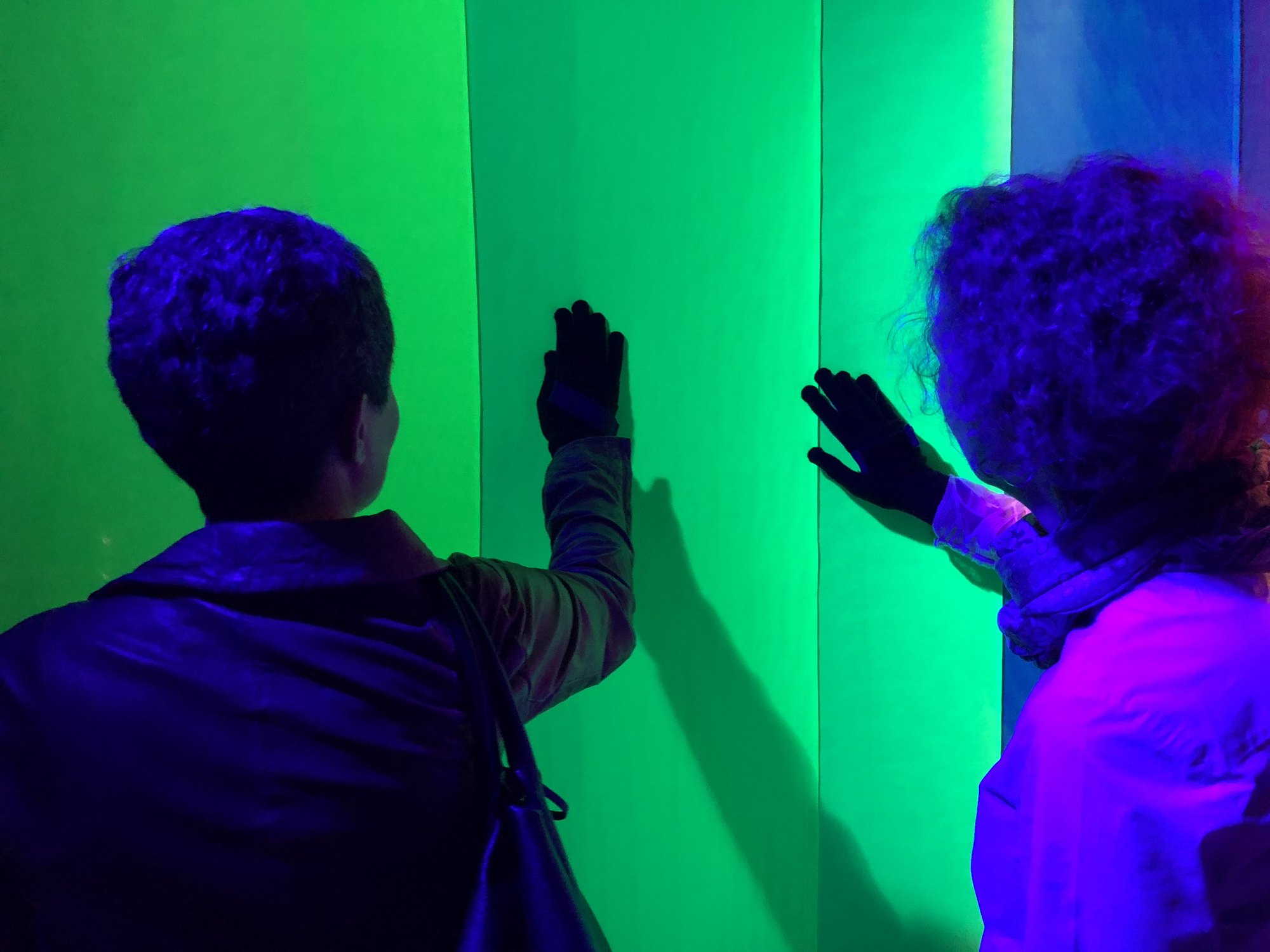
Let people meet in a bias-free environment. Two strangers in special gloves, on either side of a fabric wall, have to find each other.
The project
~8
technical directions explored in two weeks
3
studios: Rotterdam, Detroit and Belgium
1
hard deadline: Salone del Mobile
From my internship report
In Milan
“A lot of people swapped information when they saw each other for the first time.”
Observed at Salone del Mobile
Methods
Tech research
Arduino prototyping
Sensor testing
Kinect & TouchDesigner
Processing
Observation
Ethics review
How it works
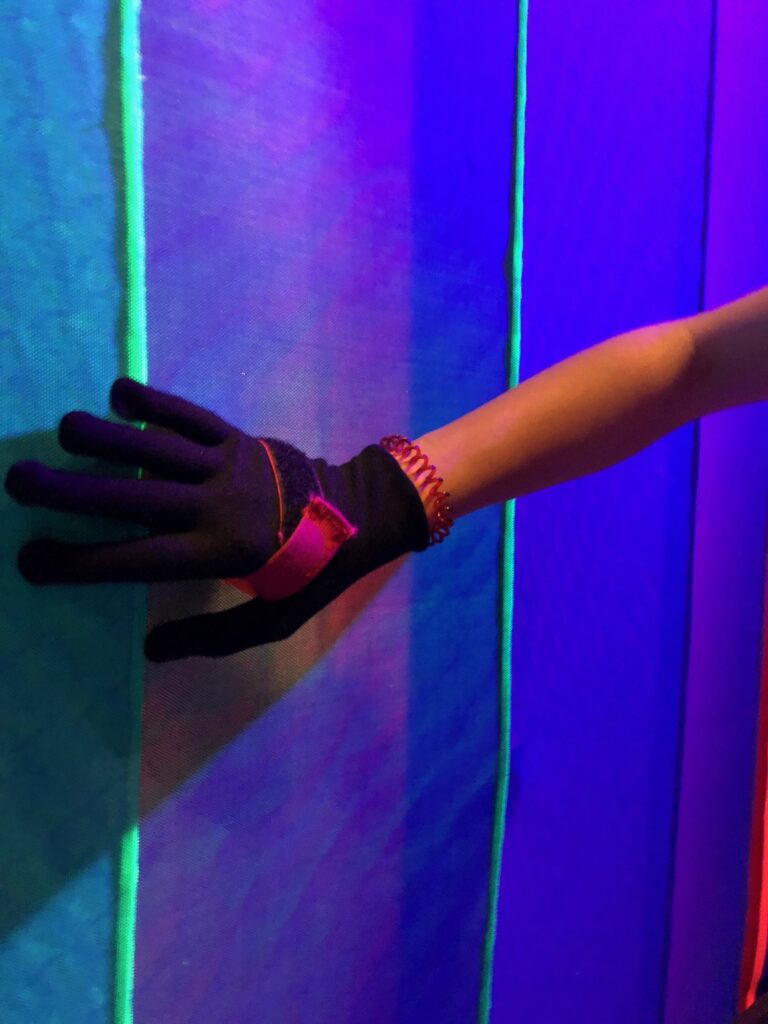
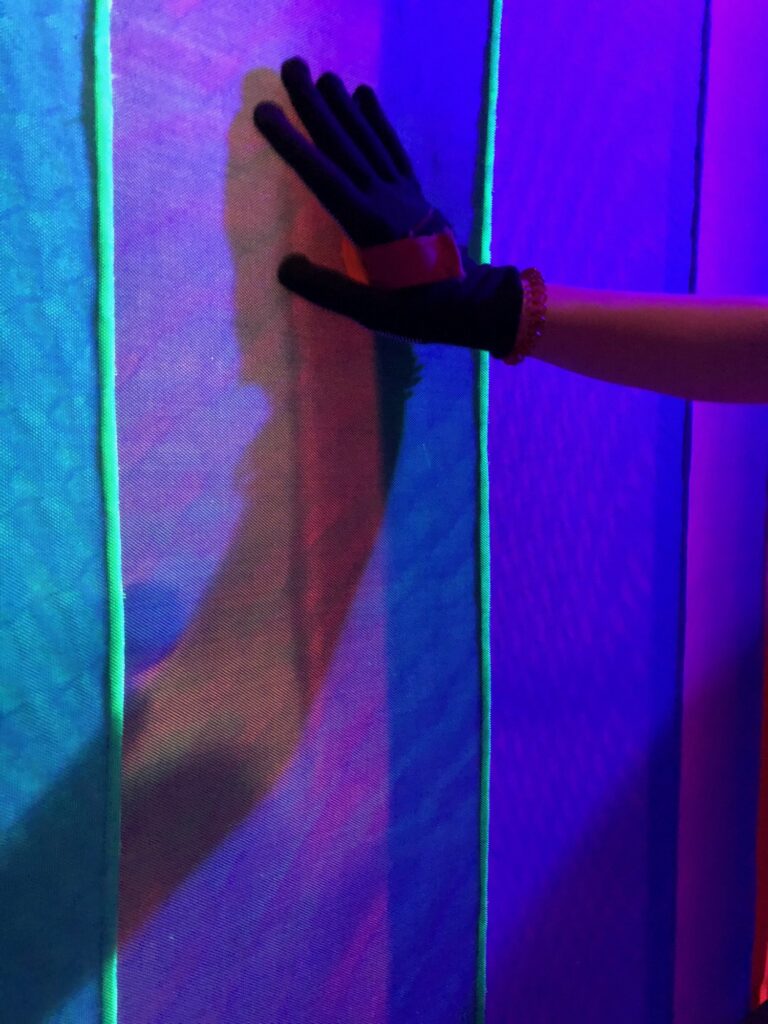
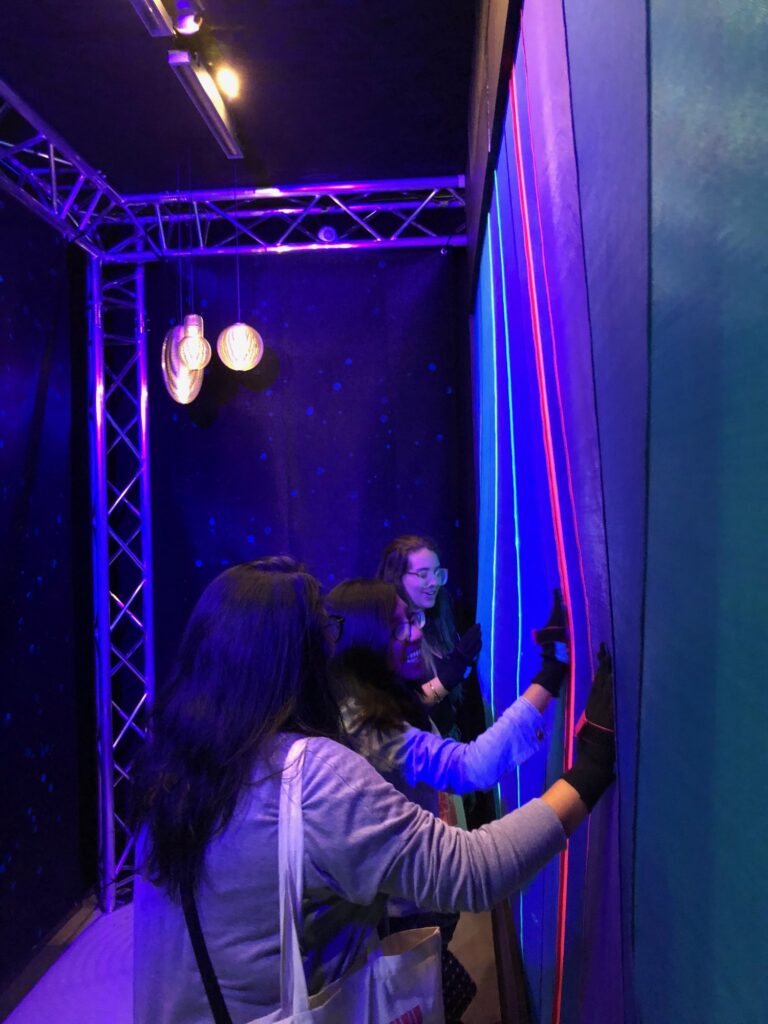
When the two find each other, they feel each other’s presence, and the lights react to their positions as they move along the wall.
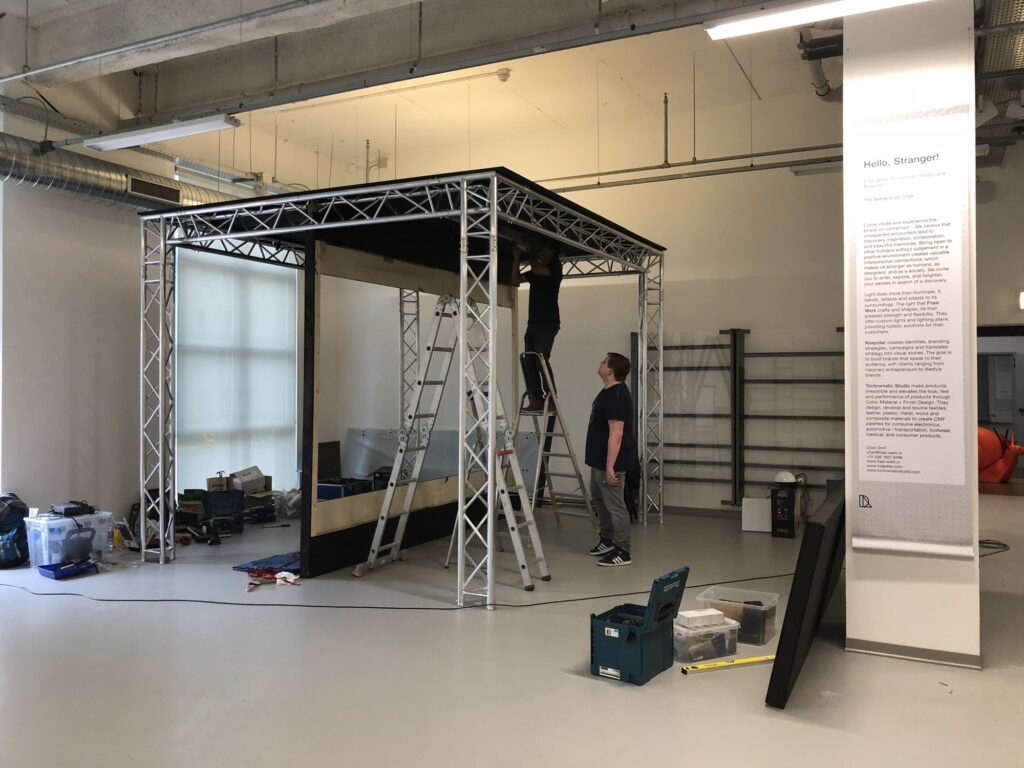
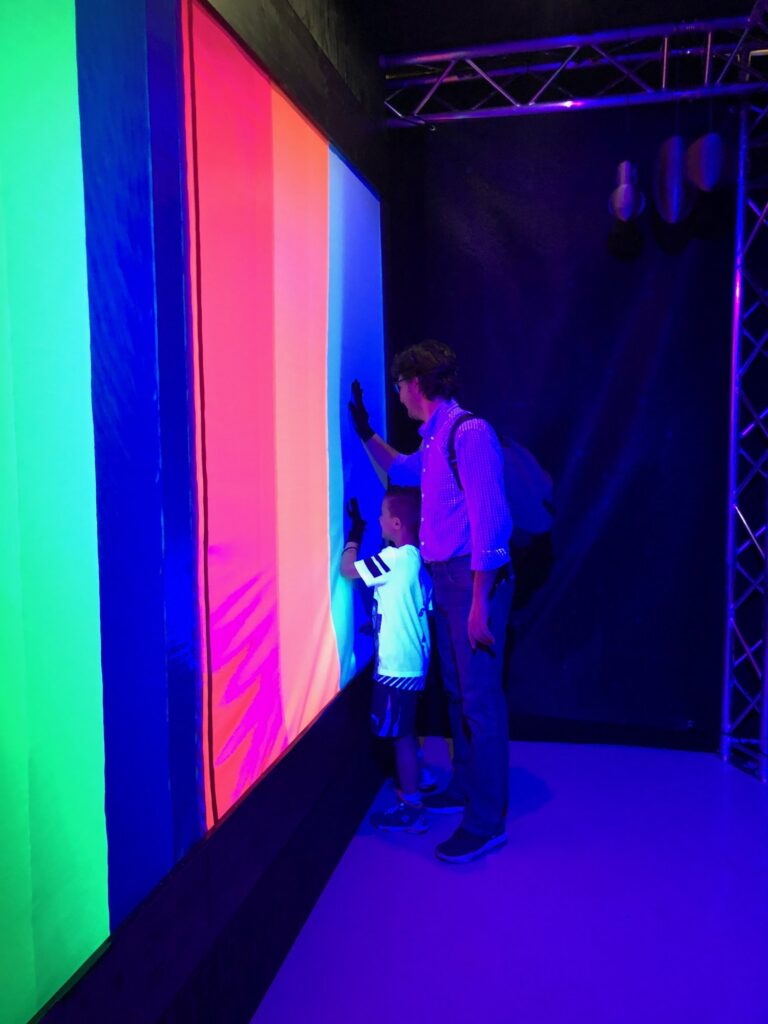
Build → exhibition
The full story
01
The challenge
01
The challenge
Hello Stranger was an installation made in collaboration between Fraai-werk in Rotterdam and Trichromatic Studio in Detroit, for the Salone del Mobile in Milan. The goal was to let people meet in a bias-free environment.
We gave visitors a special glove and placed them on either side of a fabric wall. They had to find each other, and when they did, they would feel each other’s presence. As they moved along the wall, the lights would react to their positions. My job: find technology that makes this work, and design the experience around it.
02
Research: finding the right technology
02
Research: finding the right technology
In two weeks I searched through maybe 300 websites and explored almost eight solution directions. I tested each one with Arduino and worked out the pros and cons with my colleagues.
01
Stepper motor
For a moving wall. Dropped with the Detroit studio.
02
Hall-effect sensors
Detect the magnets in the gloves, but only from one side.
03
Infrared
Sender and receiver too big for a glove.
04
Kinect
Turns the wall into a touchscreen. The software wasn’t good enough.
05
RFID
Right size, and I got it working.
06
Airscan
Accurate infrared detection. The final choice.
Learning TouchDesigner (written in Python, a language I didn’t know yet) for the Kinect, and the UDP protocol between the Airscan and the lighting software, meant a lot of new ground in a short time.
03
Key insights
03
Key insights
Don’t let users trigger their own connection
With sensors in the glove, a user could activate their own connection moment just by closing their hand.
Stay as close to the concept as possible
Every choice was checked against one question: are we still close enough to our concept?
Think about who could get hurt
The lights shouldn’t be too wild for people with epilepsy, and the magnets not too strong for people with a pacemaker.
04
Design decisions: what I found, and what I did with it
04
Design decisions: what I found, and what I did with it
Insight
Detection in the glove made it bulky or let people trigger their own connection. Turning the wall into a touch surface felt like the best idea so far.
Prototyping with sensors and the Kinect
Decision
Choose the most natural interaction
We chose the Airscan: an infrared device that does what I tried with the Kinect, but accurately. It was the most natural interaction for our experience, so we let go of the RFID solution I had working.
Insight
At the fair, a language barrier made it unclear for some visitors what to do, and people often got so enthusiastic that it was too wild for the fabric.
Observation in Milan
Decision
Someone inside to guide visitors
On the later days we always had someone inside giving instructions. The question for the next version: how can it work without a person explaining it?
Insight
Before we left for Milan, I checked with my supervisors whether the product and my solutions were ethically responsible.
Ethics review
Decision
Safe light and safe magnets
We kept the light effects calm enough for people with epilepsy and the magnets weak enough for people with a pacemaker.
When the tech failed
During the design week we ran into everything, from DMX lights with the wrong IDs to a router that stopped completely. Until Thursday I used webcams to see when people were inside and played “the Wizard of Oz” to make it seem interactive. Then it suddenly all worked, and I could finally make the lights truly interactive.
05
Result
05
Result
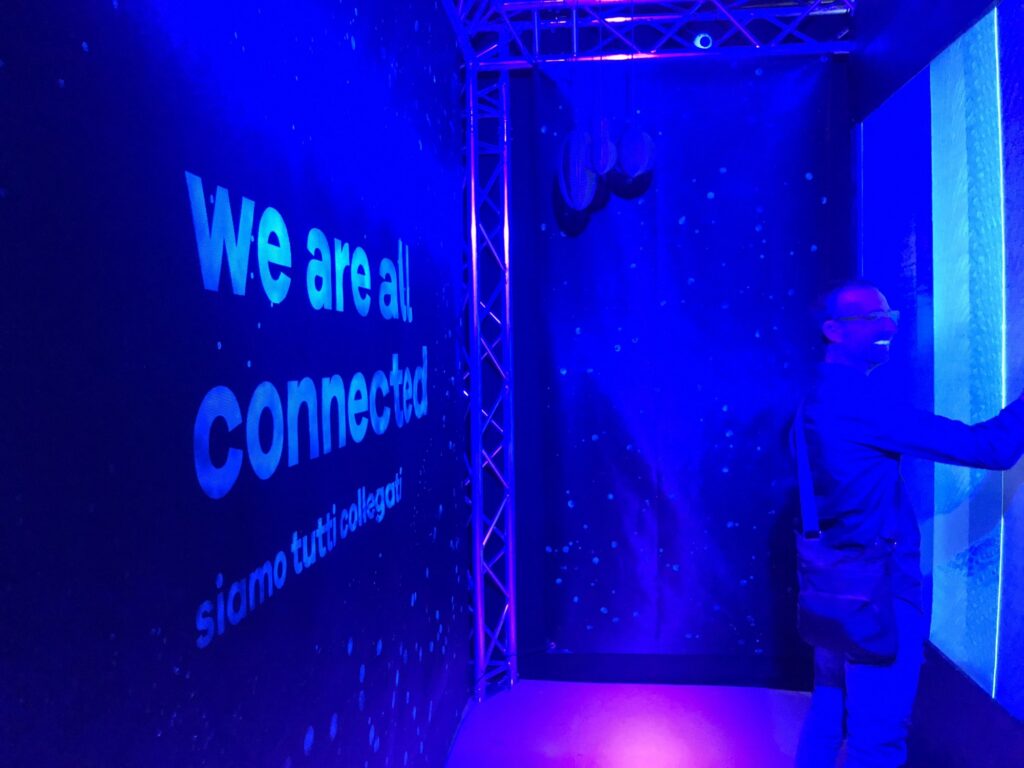
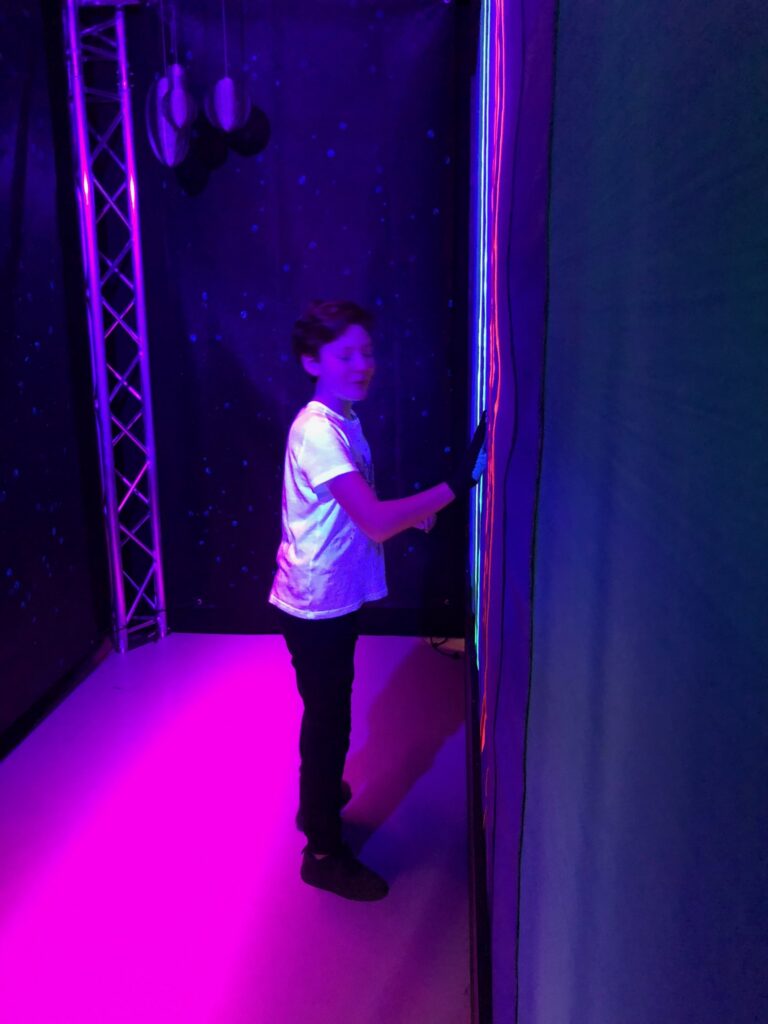
Hello Stranger was shown at the Salone del Mobile in Milan in April 2018. Overall, people found it clear and a lot of fun, and many swapped contact details after meeting. Watch the video ↗
06
Reflection
06
Reflection
“Planning, time management and setting priorities can all be a lot better. With a hard deadline, bad planning simply means parts don’t make it.”
I learned a lot about quick prototyping and design argumentation. My supervisors said that what I brought to the table was useful and relevant, and that it helped us make well-considered choices in a short time.